
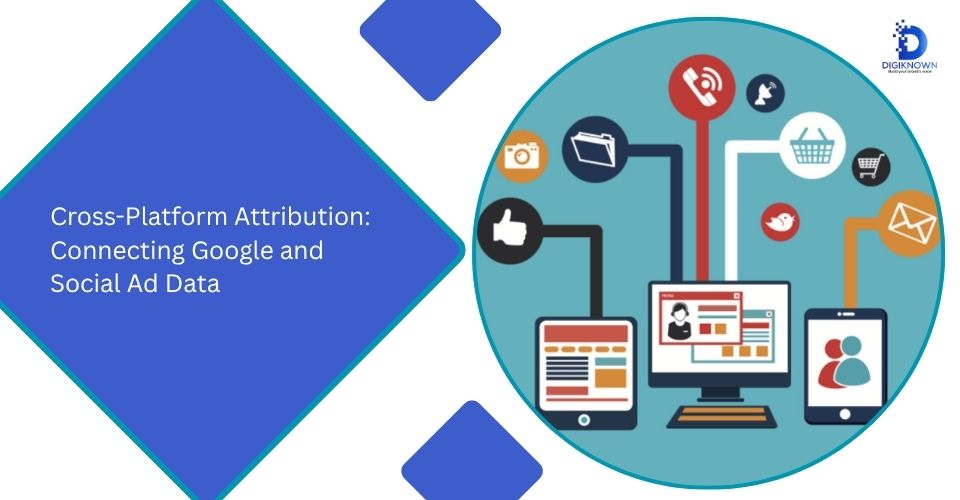
Digital advertising rarely happens on one platform. A customer may discover a business through Instagram, click a Google ad later, return through organic search, and finally submit a form. If each platform is measured separately, it can become difficult to understand which channels actually contributed to the conversion.
Cross-platform attribution connects data from Google, Meta, LinkedIn, TikTok, and other advertising platforms to create a clearer picture of the customer journey. For businesses using digital marketing services Qatar, this approach can improve campaign decisions, budget allocation, and reporting.
For a digital agency in Qatar, accurate attribution is also essential for showing clients where leads and conversions are coming from.
What Is Cross-Platform Attribution?
Cross-platform attribution is the process of connecting advertising and conversion data from multiple marketing channels.
Instead of asking:
“Which platform got the conversion?”
Marketers can ask:
“Which channels influenced the customer before the conversion?”
This distinction matters because customers rarely follow a single, predictable path.
A typical journey might look like:
- Customer sees an Instagram advertisement.
- They visit the website.
- They leave without converting.
- They later search Google.
- They click a paid search advertisement.
- They return through a branded search.
- They complete a contact form.
Looking only at the final Google interaction would miss the earlier social touchpoint.
Why Platform Reports Often Disagree
Google Ads, Meta Ads, LinkedIn, and other platforms have their own attribution systems.
Each platform may use different:
- Attribution windows
- Conversion definitions
- Tracking methods
- Reporting rules
- User identification methods
As a result, the same conversion may appear in more than one platform’s report.
This doesn’t necessarily mean the data is incorrect. It means the platforms are measuring the customer journey from different perspectives.
The Difference Between Attribution and Analytics
Analytics tells you what happened on your website.
Attribution tries to explain which marketing interactions contributed to those outcomes.
For example, analytics might show:
- 10,000 website visitors
- 600 form submissions
- 150 phone calls
- 80 purchases
Attribution goes a step further by examining the marketing touchpoints associated with those conversions.
This helps marketers understand which channels deserve attention and investment.
Start With Consistent Tracking
Reliable attribution starts with consistent campaign tracking.
UTM parameters are commonly used to identify traffic sources.
A campaign URL can include information such as:
- Source
- Medium
- Campaign
- Content
- Keyword or term
For example, different social campaigns should not all use identical tracking information.
Consistent naming makes data easier to analyse later.
Connect Google Ads Data With Analytics
Google Ads and Google Analytics can provide complementary information when configured correctly.
Google Ads can help measure:
- Ad interactions
- Campaign performance
- Cost
- Conversions
- Search terms
Analytics can provide broader website behaviour, including what visitors do after arriving.
Connecting the systems can provide a more complete view of the path from advertisement to conversion.
Bring Social Advertising Data Into the Picture
Social platforms provide valuable information about discovery and engagement.
Depending on the platform, marketers may analyse:
- Impressions
- Reach
- Clicks
- Engagement
- Landing-page visits
- Leads
- Purchases
The important step is connecting these interactions with the eventual business outcome.
A social campaign may generate fewer direct conversions but still introduce valuable prospects who later convert through another channel.
First-Click vs Last-Click Attribution
Two simple attribution approaches are first-click and last-click.
First-click attribution
The first marketing interaction receives the credit.
This model can help identify channels that generate initial awareness.
Last-click attribution
The final interaction receives the credit.
This is useful for understanding which channels commonly close conversions.
However, both models simplify complex customer journeys.
Multi-Touch Attribution Gives More Context
Multi-touch attribution attempts to distribute credit across multiple interactions.
For example:
Social ad → Website → Google search → Email → Conversion
Instead of giving all the credit to one channel, a multi-touch model considers the complete journey.
This can provide a more balanced view of channel contribution.
However, attribution models are not perfect. They rely on the quality and completeness of the available data.
Don’t Confuse Correlation With Causation
A channel appearing before a conversion doesn’t automatically mean it caused the conversion.
This is one of the most important attribution principles.
For example:
- A customer sees an advertisement.
- They already know the brand.
- They later search for the company.
- They convert through Google.
The social advertisement may have contributed to awareness, but the data alone may not prove that it caused the purchase.
Good attribution requires careful interpretation.
Use Conversion Data That Matters to the Business
Not every conversion has the same value.
A marketing team should distinguish between:
- Page views
- Form submissions
- Phone calls
- Qualified leads
- Appointments
- Purchases
- Repeat customers
For service businesses, a form submission may only be the beginning of the sales process.
Tracking the journey beyond the initial lead can produce much more useful marketing insights.
Connect CRM Data With Advertising Data
CRM integration can take attribution beyond website conversions.
A CRM may reveal whether a lead:
- Submitted a form.
- Was contacted by sales.
- Became qualified.
- Received a proposal.
- Became a customer.
This helps marketers optimise for revenue, rather than simply generating more leads.
For example, one advertising channel may generate 100 leads while another generates 30. If the second channel produces significantly more qualified customers, its smaller lead volume may actually represent better performance.
Offline Conversions Matter Too
Not every conversion happens online.
Businesses may receive customers through:
- Phone calls
- In-person visits
- Sales teams
- Consultations
- Physical locations
Connecting offline outcomes with online marketing data creates a more complete attribution system.
This is particularly valuable for businesses where the sales cycle extends beyond a website form.
Privacy Changes Make Attribution Harder
Modern attribution has become more challenging because tracking technologies and privacy requirements continue to evolve.
Factors include:
- Browser restrictions
- Consent requirements
- Cookie limitations
- Cross-device behaviour
- Platform-specific tracking systems
This means marketers should avoid relying on a single tracking method.
A stronger approach combines multiple reliable data sources.
Build a Central Reporting System
When advertising data lives in separate platforms, reporting becomes difficult.
A central dashboard can bring together:
- Advertising spend
- Website traffic
- Leads
- Conversions
- Revenue
- Cost per acquisition
- Channel performance
This gives marketing teams one place to evaluate campaign performance.
What Should You Compare Across Channels?
Don’t compare platforms using only clicks or impressions.
Consider metrics such as:
MetricWhy It MattersCost per leadShows acquisition efficiencyQualified leadsMeasures lead qualityConversion rateShows how traffic performsCustomer acquisition costConnects marketing spend to customersRevenueShows business impactReturn on ad spendCompares advertising efficiency
The right metrics depend on the business model and sales cycle.
Common Attribution Mistakes
Businesses often make attribution harder than it needs to be.
Avoid:
- Using inconsistent UTM naming
- Measuring every platform separately
- Counting low-value conversions equally
- Ignoring offline sales
- Relying entirely on last-click attribution
- Changing tracking without documentation
- Making decisions from one data source
A consistent measurement framework creates much more useful reporting.
A Practical Cross-Platform Attribution Framework
A simple process can make attribution easier.
1. Define the conversion
Decide what actually matters to the business.
2. Standardise tracking
Use consistent campaign names and UTM structures.
3. Connect platforms
Bring advertising, analytics, CRM, and conversion data together where appropriate.
4. Validate the data
Check whether reported conversions match actual business outcomes.
5. Compare channel performance
Evaluate cost, quality, conversion, and revenue—not just traffic.
6. Optimise based on evidence
Shift budgets based on reliable performance patterns rather than assumptions.
Why Choose Digiknown?
Digiknown provides digital marketing services in Qatar businesses can use to build more connected and measurable marketing campaigns. From analytics and paid advertising to SEO, website development, conversion tracking, and campaign strategy, Digiknown focuses on connecting marketing activity with meaningful business outcomes. Its approach helps businesses understand where leads come from, how customers move through the buying journey, and which channels contribute to growth.
Conclusion
Cross-platform attribution helps businesses move beyond isolated advertising reports. A customer may interact with several channels before becoming a lead or customer, so giving all the credit to one platform can create an incomplete picture.
Connecting Google, social advertising, website analytics, CRM records, and offline conversions provides a stronger foundation for marketing decisions. The goal isn’t to find one platform that deserves all the credit. It is to understand how different channels work together.
For businesses investing in digital marketing services Qatar, better attribution can lead to smarter budget allocation, clearer reporting, and more informed campaign optimisation. With the right tracking structure and a reliable measurement strategy, Digiknown helps businesses turn fragmented marketing data into actionable insights.