Online marketing is no longer a stagnant discipline; it is a dynamic ecosystem that changes and adjusts at the pace of technology. In order to remain competitive, the companies should no longer rely on the old fashioned ways of doing things, but should rather adopt the latest trends that are transforming the manner in which the brands are interacting with the consumers.
The fundamental objective is the same—to motivate meaningful interaction and turn interest into sales, but the means is getting much smarter, quicker, and more individual. Knowing the recent developments is essential to any company that wants to grow and achieve great returns on investment (ROI) in the long run.
What is Online Marketing?
Online marketing is a type of digital marketing that involves the use of the Internet in marketing products or services. Due to this reason, it is commonly known as internet marketing.
Some of the popular strategies in online marketing are:
- Search engine optimization (SEO)
- Social media marketing
- Email campaigns
- Website marketing
- Pay-per-click advertising (PPC or paid ads)
Online marketing is also referred to as e-marketing, which may be confused with electronic marketing which can have more general definitions.
This form of marketing is considered to be the reverse of conventional marketing which is carried out in offline form which includes printed flyers, billboards (not digital, excluding phone calls, TV commercials).
Key Benefits of a Modern Digital Strategy
There are many benefits of online marketing compared to conventional techniques, and all of them are enhanced by the recent technological trends:
- Global Reach:
Global businesses have the ability to access a global audience and increase their customer base beyond the geographical boundaries.
- Cost-Effectiveness:
It is usually cheaper than conventional advertising and thus businesses of any size can compete easily.
- Measurable Results:
It is possible to monitor and analyze campaign performance in real-time with such tools as Google Analytics and optimize it data-driven and understand the ROI clearly.
- Precise Targeting:
Campaigns may be targeted at particular demographics, interests, and behaviors, with messages being delivered to the most interested audience.
- Enhanced Engagement:
Online platforms can provide two-way, real-time communication with customers in the form of comments, emails, and social media, which can be used to develop relationships and loyalty.
Types of Online Marketing and Next-Gen SEO and PPC
The online marketing broad domain covers a very broad list of strategies and channels, most of which are undergoing AI and data-driven revolutions.
- Search Engine Optimization (SEO):
The act of making a site appear higher in search engines results pages (SERP) such as Google, thereby generating more organic (unpaid) traffic. Contemporary SEO is shifting towards intent-based search and searcher intent and E-E-A-T ( Experience, Expertise, Authoritativeness, and Trustworthiness) demand more in-depth and comprehensive content.
- Pay-Per-Click (PPC) Advertising:
This is a system in which an advertiser is charged a fee whenever their advertisement is clicked. Popular ones are Google Ads and social media ad systems (e.g., Facebook Ads). PPC is getting more and more automated, and AI-based bidding and dynamic ad creation provide more hyper-personalized ads to micro-audiences.
- Content Marketing:
The production and distribution of valuable, relevant content (such as blog posts, videos or e-books) to draw and keep an audience, making the brand appear authoritative.
- Social Media Marketing (SMM):
This involves advertising products/services and interacting with the audiences on social sites like Facebook, Instagram, LinkedIn, and Tik Tok.
- Email Marketing:
Sending personalized messages to a subscriber list, with a focus on targeted messages, to market content, offers and events, and build customer relationships.
Top Online Marketing Trends for 2025
- AI and Hyper-Personalization for SEO and PPC
The main aspect of contemporary internet marketing is Artificial Intelligence, which is no longer a simple automation but a highly advanced data analysis, predictive analytics, and content generation. This enables Hyper-Personalization which provides personalized content, product suggestions and real-time personalized web experiences to specific users.
Such customization is very high and increases conversion rates and customer satisfaction tremendously. The refinement of PPC campaigns is also being enhanced using AI to predict the best bid per impression and also SEO through the analysis of large data sets to identify the most suitable, high-ranking gaps in content.
- Short-Form Video Dominance in SMM
On platforms such as Tik Tok, Instagram Reels, and YouTube Shorts, short video content is one of the main types of engagement because of the reduction of attention span. This is a format that is required in an effective SMM.
These platforms are being used by brands to create quick tutorials, behind-the-scenes content, and easily digestible and highly shareable storytelling, which leads to brand awareness within a short period and the engagement rate is significantly higher than with the static post.
- Authenticity and User-Generated Content (UGC)
Authenticity is a great currency because consumers are less trustful of corporate brands and more trustful of real people. Marketers are using user-generated content (UGC) and collaborating with nano- and micro-influencers to develop a sense of community around the brand and credibility. Such SMM enables brands to access authentic passion which is a strong social evidence that can directly sell.
- Social Commerce and Shoppable Content
The line between social media and e-commerce is becoming more indistinct, and platforms are adding in-app shopping capabilities that enable users to buy directly in their feeds or during live streams.
This smooth transition of shopping into the SMM experience eliminates friction of the buying process and is a key success factor of instant conversion and sales development.
- First-Party and Zero-Party Data Strategy
As third-party cookies are phased out and privacy laws increase, it is essential to collect and use first-party data (data that you collect directly with permission of your customers) and zero-party data (data that customers volunteer to share) to do effective targeting.
This information becomes the new base of all effective online marketing activities, including the personalized emailing campaigns, or splitting the audiences into successful PPC advertisements.
Developing an Effective Strategy with SEO, PPC, and SMM
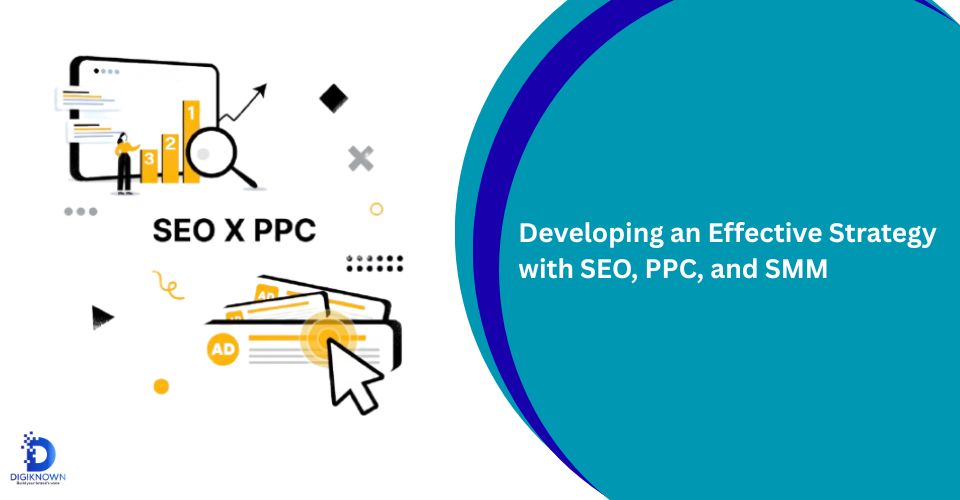
An effective online marketing plan needs to be holistic and to encompass all channels:
- Define Your Goals:
Have measurable, specific, achievable, relevant and time-bound (SMART) goals (e.g. increase traffic on the website by 20% within three months).
- Identify Your Target Audience:
Develop buyer personas in order to know who your perfect customers are, what they need, what they are interested in and where they spend their time online.
- Select the Right Channels:
Select the type of online marketing that is most appropriate to your objectives and target market. To achieve the results quickly, you can pay attention to PPC. Deep investment in SEO and content is required in long-term organic growth. In the case of community and engagement, SMM is important.
- Create Engaging Content:
Produce high-quality, relevant content that brings value to your audience in various parts of the purchasing process.
- Measure Performance:
Monitor the key performance indicators (KPIs) such as traffic, conversion rates and levels of engagement on the site using analytics tools to determine what is working.
- Analyze and Optimize:
You can constantly optimize your campaigns in response to the information and feedback to ensure that you reap the maximum out of your investment.
Why Choose Digiknown?
Digiknown is an in-house digital agency that specializes in branding, marketing, web design and development, and serves clients starting with start-ups. We are offering end-to-end digital solutions, so that all your branding, site and marketing efforts are seamlessly matching to get the maximum out of them.
The result of our all-in-house team is improved communication, consistency, and an integrated approach that is thorough and across all digital platforms, including search and social.
Conclusion:
Recent developments in web-based marketing prove that the key to success lies in the combination of innovative technology and the sense of genuine human interaction. Adopting AI, short-form video, and data-privacy-first targeting are no longer a choice, but the only way to achieve high engagement and verifiable sales in 2025 and beyond. To find a strategic partner to work within this complex terrain, Digiknown is the best solution where the company has a full-in-house digital team that can ensure integrated strategy, clear implementation, and quantifiable outputs in the areas of branding, web development, and performance-driven marketing.
Ready to leverage these trends for your business? Contact Digiknown today for a comprehensive digital strategy tailored for engagement and sales growth.
Frequently Asked Questions
- What exactly is online marketing?
Online marketing is defined as the act of advertising products, services and brands to prospective consumers using digital platforms such as search engines, social media, email and websites.
- What is SEO in online marketing?
Search engine optimization (SEO) refers to the act of making your web site visible in search engine results page (SERP) to achieve a greater organic traffic.
- Is online marketing expensive for small businesses?
This is not true, internet marketing can be highly economical. Most of the strategies such as SEO and content marketing do not need huge financial input but time and effort and even paid advertisements can be done with a small budget.
- How long does it take to see results from online marketing?
Results vary by channel. Paid advertising (PPC) can bring traffic instantly whereas organic methods such as content marketing and SEO may require several months to gain momentum and record meaningful results.